Rogue Core Siege Engines Guide: Beating Slow Double-HP Enemies
Siege Engines halves enemy speed but doubles their HP. Learn why kiting gets easy and killing gets slow, which DPS builds pass the check, and how to beat the mission clock.
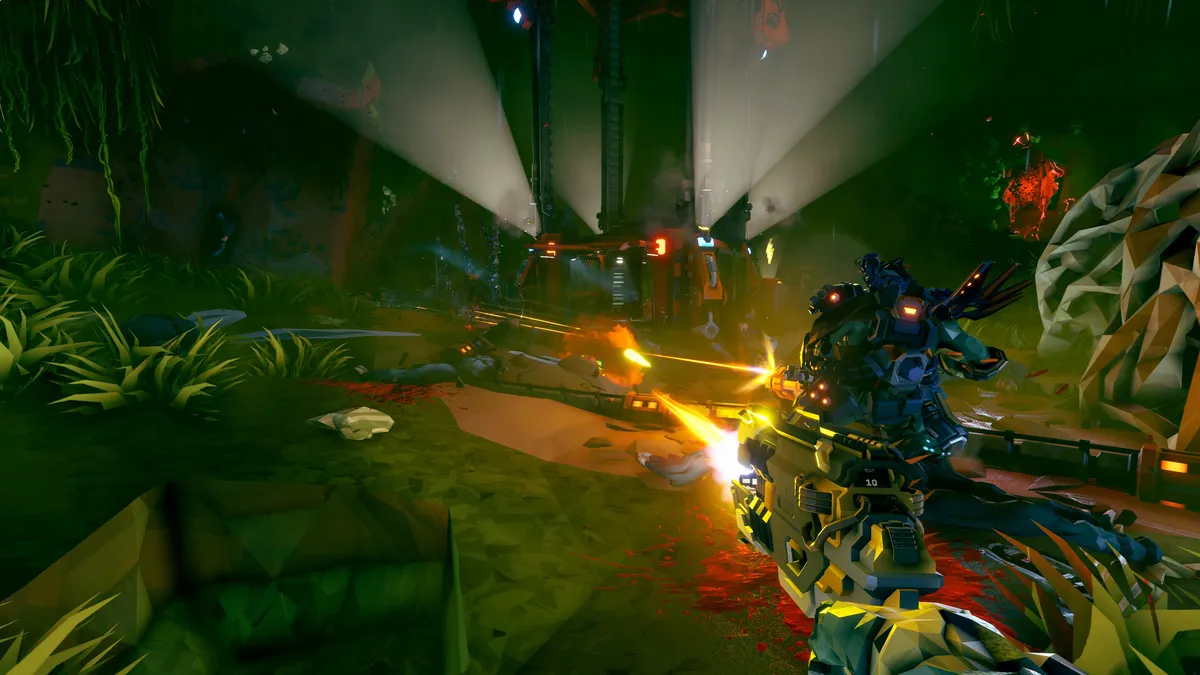
Combat Summary
- Official: Siege Engines is one of the four new Alterations added in Update 2 (September 2, 2026). Enemies move at half speed but have double HP.
- Official: The alteration applies run-wide once selected — every enemy you meet is slower and beefier, from the first cavern to the Gatekeeper.
- Tactical read: This is a crowd-control paradise and a DPS check at the same time. Kiting gets easy; killing gets slow. Bring damage, not mobility, and watch the mission clock — slow kills on a timer is how runs die.
Siege Engines is the most deceptive of the four new Alterations. The first room feels like a gift: enemies lumber toward you at half speed, your dodges land effortlessly, and positioning mistakes go unpunished. Then you check your ammo and the clock. Double HP means every fight takes roughly twice as long, and Rogue Core’s missions are timed. This alteration does not test your reflexes — it tests your damage output and your pacing discipline. This guide covers the builds that pass the DPS check, the positioning habits that convert slow enemies into free kills, and the timer math that decides whether Siege Engines is a power fantasy or a slow-motion wipe.
What Siege Engines Actually Does
Per the official Update 2 patch notes, Siege Engines applies two modifiers to every enemy in the run: movement speed cut in half, hit points doubled. Attack speed, projectile speed, and damage are untouched — a slow enemy still hits just as hard when it finally reaches you. The alteration stacks with the Threat Levels difficulty system: on higher Threat Levels, you get the Threat Level’s own HP scaling on top of the alteration’s doubling, which is why this modifier feels dramatically different on Threat Level 1 versus Threat Level 5.
The half-speed component changes enemy behavior in ways that go beyond “easier to dodge.” Melee enemies that normally pressure you into constant repositioning arrive late and leave early — you can stand your ground and trade damage far more aggressively. Ranged enemies still shoot on their normal cadence, so the alteration does not trivialize projectile pressure. And slow enemies are trivially easy to funnel: a chokepoint that would be overrun in seconds under normal rules holds for the entire fight under Siege Engines.
The DPS Check: Passing It
Double HP is a flat, honest tax on your damage output. If your build kills a standard enemy in 2 seconds, it now takes 4. Across a full mission, that compounds into minutes — minutes the mission timer does not give you. The builds that pass the Siege Engines check share three traits:
Sustained damage over burst. Cooldown-gated nukes look great on paper but the doubled HP pools eat your burst and leave you waiting. Weapons and upgrades that raise your damage floor — flat damage bonuses, fire-rate increases, damage-over-time effects — scale linearly through the doubling and keep every second productive.
Ammo efficiency. Twice the HP means roughly twice the ammo per room. Builds that were already ammo-hungry become liabilities; builds with strong damage-per-bullet become premium. If your loadout has an ammo economy problem on normal runs, Siege Engines will expose it by the third stage. Fix the economy before you pick the alteration.
Damage that ignores the speed advantage. Since enemies arrive slowly, you get more free damage windows — but only if your build can capitalize on stationary or slow-approaching targets. Long-windup heavies, charged shots, and deployables that need setup time all become dramatically better when nothing is rushing you.
What to bench: mobility-first builds. Dash-heavy, reposition-dependent loadouts waste their main advantage here — the enemies are already slow. Trade that mobility budget for damage.
Positioning: Converting Slow Into Free
Half-speed enemies are a positioning puzzle with a known solution: never fight in the open. In open ground, slow enemies still surround you eventually — they just take longer, which lulls you into overcommitting. In a chokepoint, slow enemies are a conveyor belt of free damage: they arrive one or two at a time, you delete them at your leisure, and the doubled HP barely matters because nothing is pressuring you.
The advanced play is kiting in circles around the objective. Since enemies move at half speed, you can complete mining, revives, and objective interactions in windows that would be suicidal at normal speed. The alteration effectively doubles your safe interaction time. Squads that internalize this clear objectives faster under Siege Engines than on normal runs — the HP tax on combat is offset by the time saved on objectives.
Boss fights deserve a special note. Gatekeepers under Siege Engines are slow but enormously tanky, and the Update 1.2 counterattack rework means they still punish greed. The winning boss pattern is patience: the boss cannot pressure you quickly, so take the safe damage windows, never trade hits, and let the doubled HP melt over a longer, calmer fight. Rushing a double-HP Gatekeeper is the number one cause of Siege Engines wipes.
The Timer Problem
Every Siege Engines run lives or dies on pacing. Rough math: if combat takes twice as long but your objective interactions are safer and faster, the alteration is roughly neutral on total mission time — for a disciplined squad. For an undisciplined one, the slow kills invite “one more pack” syndrome: each room takes longer, the team compensates by hurrying the objectives, mistakes compound, and the run bleeds out on the clock.
Set a per-stage time budget before the mission starts and honor it. When the budget is gone, you move — even if the room is not fully cleared, because under Siege Engines a room is never fully cleared quickly. This is also the alteration’s main anti-synergy: on Assault Pace Reckless or high Threat Levels with wave stacking, the timer pressure and the HP tax multiply. Pick your difficulty honestly.
When to Take It — and When to Skip It
Take Siege Engines when: the squad’s builds are damage-heavy but fragile — the half speed protects glass cannons; you want a calmer learning environment for a new Depth; or your team struggles with positioning and wants the training wheels version of enemy pressure. Compare it against the other three options in the full Alterations guide before the squad votes.
Skip it when: the squad’s damage is already marginal (the doubling will push fights past the timer); you are on a tight mission timer or Reckless pace; or the team is pushing Threat Levels 4–5, where stacked waves of double-HP enemies turn every arena into a war of attrition. If you are still learning the difficulty system itself, read the Threat Levels explained guide first — pick the alteration for the difficulty you can actually clear.
Common Mistakes
- Fighting in the open. The alteration rewards chokepoints; open-field brawling wastes the entire speed advantage.
- Bringing a mobility build. Dashes and reposition tools solve a problem this alteration already solved. Bring damage instead.
- Underestimating ranged enemies. Their projectiles are not slowed. Projectile pressure is the real threat under Siege Engines, not melee.
- Rushing the Gatekeeper. Double HP plus counterattacks punishes greed. Slow fight, safe windows, no trading.
- No time budget. The silent killer. Set per-stage limits and move when they expire, cleared or not.
Patch Notes
- Update 2 (September 2, 2026): Siege Engines introduced as one of four new Alterations — enemies move at half speed, have double HP.
- No hotfix changes to Siege Engines as of October 19, 2026.
Verification status: Official Update 2 patch notes. Tactical advice is gameplay analysis, not developer statements. Updated October 19, 2026.
Continue Reading
Don't deploy without all the intel. Check out this related file:
Rogue Core Alterations Ranked: Best to Worst Run Modifiers →