Rogue Core Threat Level 4 and 5: How to Survive Wave Stacking
Threat Level 4 and 5 in Rogue Core add wave stacking — overlapping waves that end runs. How the difficulty scales and the builds that survive it.
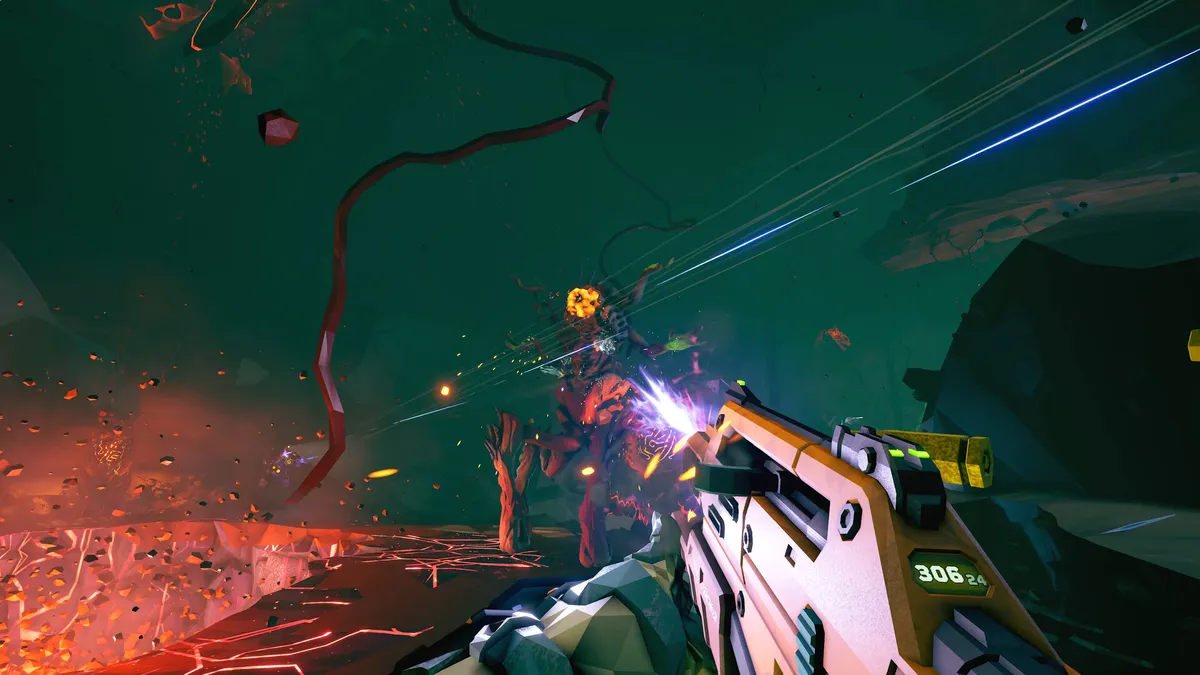
Combat Summary
- Official: On Threat Level 4 and Threat Level 5, stage waves can stack — a new wave arrives before you have finished the old one. This used to be a bug; Update 2 made it an official feature.
- Official: Threat Levels scale enemy count, swarm frequency, enemy HP and movement speed, aggression, attack frequency, projectile speed, and overall damage. Depth is now purely a content progression tree and no longer affects difficulty.
- Guidance: Surviving stacked waves is about crowd control and sustained area damage, not single-target burst. Bring mobility, keep an escape route open at all times, and spend Expenite on defensive upgrades earlier than feels necessary. Everything marked “guidance” below is tactical advice, not official data.
What Wave Stacking Actually Means
Before Update 2, each stage wave was a discrete event: clear it, breathe, next wave. On Threat Level 4 and 5 that contract is gone. Waves overlap, which means the enemy count on screen is no longer bounded by a single wave’s budget — it is bounded by how fast you kill. Fall behind the kill pace and the arena fills faster than you can empty it. That is the entire mechanic, and it is why builds that dominate Threat Level 3 can collapse on Threat Level 4 without a single mistake: the math changed, not your aim.
Note that Depth has nothing to do with this. Since Update 2, Depth only decides which content you see — biomes, Gatekeepers, unlocks. A Depth 1 mission on Threat Level 5 stacks waves exactly like a Depth 3 mission does. Pick your Threat Level for the challenge you want; pick your Depth for the content you want.
What Scales at Each Level
Official — the full list of Threat Level scaling factors: enemy count, swarm frequency, enemy HP, enemy movement speed, aggression, attack frequency, projectile speed, and overall damage output. Every one of these turns up as you climb, and Threat Levels 4 and 5 add wave stacking on top.
In practice, the jump from 3 to 4 is the biggest difficulty spike in the game — bigger than any single new enemy or boss mechanic. Projectile speed and aggression scaling mean dodging gets harder at the exact moment there is more to dodge. This is why the community treats Threat Level 4 as the real endgame gate, not a victory lap after Threat Level 3.
Build Rules for Stacked Waves (Guidance)
Rule 1: Area damage over single-target damage. Boss-killer builds that delete one big enemy look great on paper and die to the tenth grunt. If your loadout cannot clear a packed corridor, it cannot survive stacking.
Rule 2: Crowd control is survival, not utility. Slows, stuns, and anything that buys space scale in value enormously when waves overlap. A control effect that feels like a luxury on Threat Level 2 is core infrastructure on Threat Level 5.
Rule 3: Mobility is non-negotiable. You will need to reposition constantly — to escape a stacked corner, to reach a revive, to kite while your cooldowns reset. Builds that plant their feet and trade damage lose to the arithmetic of overlapping waves.
Rule 4: Buy defense before you think you need it. The Expenite upgrade economy tempts everyone to chase damage first. On Threat Level 4+, the runs that survive are the ones that banked armor, health, or damage reduction early. You cannot DPS while dead.
Rule 5: Know your abort conditions. Stacked waves punish stubbornness. If two waves have merged and your team is scattered with cooldowns spent, the correct play is often to disengage, regroup, and re-engage on your terms — not to heroically hold a bad position.
Co-op Notes (Guidance)
Stacked waves are a team coordination check more than a gear check. Assign rough roles before the mission: who handles crowd clear, who watches for revives, who calls the retreat. The R.E.P.D. system means Expenite upgrades apply to everyone at once, so coordinate spending — four players independently buying damage upgrades while nobody buys survivability is how stacked waves wipe squads. One player banking defense early raises the whole team’s floor.
Should You Even Be Here Yet?
Guidance: If Threat Level 3 still feels tense — if you finish missions with low health and no margin — you are not ready for 4. The stacking mechanic punishes exactly the habits that Threat Level 3 forgives: slow target priority, standing still, and spending everything on damage. Clear Threat Level 3 comfortably, with control tools in your build and health to spare, then step up. There is no reward for skipping the line except faster wipes.
Verification status: difficulty mechanics per the official Update 2 patch notes (September 2, 2026). All build and tactical advice is guidance based on the current meta, not official data. Updated October 2, 2026.
Continue Reading
Don't deploy without all the intel. Check out this related file:
Rogue Core Update 2 Patch Notes: Every Change in the Big Overhaul →