Rogue Core Falconer Guide: Best Co-op Builds and Weapons
How to play the Falconer in Rogue Core: the co-op force-multiplier Reclaimer. Build priorities, weapon upgrade rules, and Threat Level 4-5 team play.
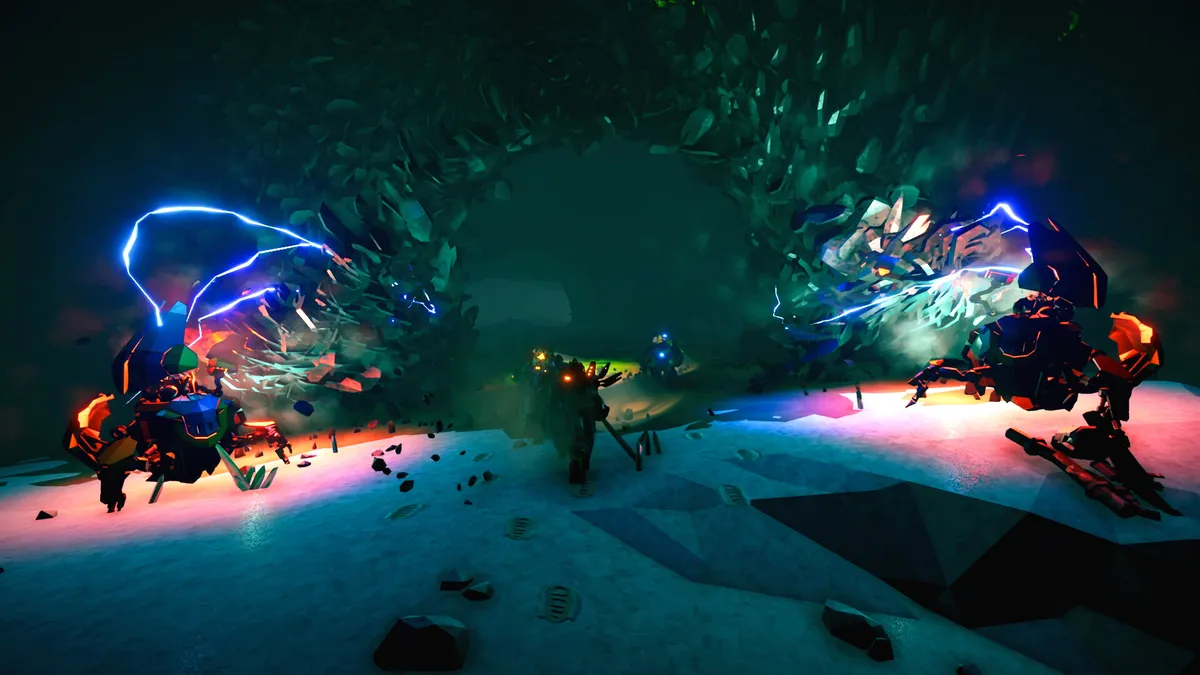
Combat Summary
- Community-tested: The Falconer is the S-tier pick for Co-op in the current Update 2 meta — and a D-tier pick for solo. If you play Rogue Core with a squad, learn Falconer first. If you play alone, pick Slicer or Guardian instead.
- What it does: The Falconer is a force multiplier. Its kit is built around team-wide utility — scouting, marking, and enabling the squad’s damage. A good Falconer does not top the damage chart; it makes the whole chart bigger.
- How to build it: Prioritize team-support options in your Builds — anything that reveals enemies, marks priority targets, or amplifies allies — rather than raw personal damage. Hold the mid-line so you can see the whole fight, mark elites first, and time your utility windows for Threat Levels 4–5, where stacked waves punish uncoordinated squads. For the full class ranking, see our Rogue Core Class Tier List.
What the Falconer Actually Is
Official: Rogue Core ships with five Reclaimer classes: Falconer, Spotter, Guardian, Slicer, and Retcon.
Community-tested: Since the Update 2 difficulty rework (September 2, 2026), the community consensus tier list rates the Falconer S-tier in Co-op and D-tier in solo. This is not a balance accident — it is the game’s role asymmetry showing through. Falconer and Spotter are force multipliers: weak alone, devastating in a squad. Slicer and Guardian are self-contained: strong alone, partly redundant in a squad.
The short version: Falconer multiplies your teammates. Every squad wants exactly one; nobody wants two, because utility does not stack the way damage does.
Build Priorities for Co-op
1. Utility first, damage second
In-game verified: Enhancement pools are per-player — your picks never dilute your teammates’. That means the Falconer can draft the full team-support package without starving the squad’s damage dealers.
Prioritize, in order:
- Vision and marking — anything that reveals enemies, highlights elites, or extends the squad’s awareness. Information is the Falconer’s primary weapon.
- Ally amplification — upgrades that make teammates hit harder, move faster, or survive longer. These scale with squad size, so they are at their best in four-player runs.
- Self-sufficiency last — just enough survivability to hold the mid-line. If you are the first one down, your utility dies with you.
2. Expenite spending
Official: Expenite flows from three sources — veins, events, and enemy drops (see our Expenite Events Guide). As Falconer, spend on upgrades the whole squad benefits from before personal damage: shared effects beat selfish stats. The shared team upgrades (Update 1) reward reward the player who thinks about the team.
3. Artifacts that help the squad
Community-tested: At the Specter Core, the R.E.P.D. lets you choose your Artifact — so pick team-affecting ones over personal nukes. Our Artifact Tier List breaks down every option; the S-tier Nuclear Optics is still excellent on Falconer, because 30 Radiation/sec of area denial protects the whole squad’s position.
Weapons: Upgrade Rules for Falconer
Official: The Update 2 patch fixed the x2 magazine upgrade double-dip bug — magazine stacking now works as written, so check your math before stacking.
The Falconer weapon rule is simple: reliable beats flashy. You need a weapon that finishes marked targets cleanly and stays up during long fights, because your job is presence, not burst.
- Favor weapons with consistent uptime over glass-cannon burst — you cannot mark targets while reloading forever. Our Ammo Economy Guide covers the sustain math.
- Keep a throwable ready. The Grenade Locker auto-unlocks at Alpha Clearance (official), and Impact Axes returned in Update 2 (official) — see our Grenade Locker Guide. A well-timed throw saves more runs than any gun mod.
- Do not chase the highest personal DPS roll. The Slicers and Guardians on your team already bring the damage; your upgrades should make their damage land.
Playing by Threat Level
Official: Update 2 replaced the old difficulty pacing with Threat Levels. Official: On Threat Levels 4–5, stage waves can now stack — previously a bug, now an intended feature.
- Threat Levels 1–3: Falconer is comfortable and a little overkill. Use these runs to learn marking angles and sightlines. See Threat Levels Explained.
- Threat Levels 4–5: This is where the Falconer earns the S-tier. Stacked waves mean chaos — squads without coordination die, and squads with a Falconer calling targets survive. Time your utility for the overlap moments, not the opening seconds. Our Threat Level 4–5 survival guide covers the full playbook.
Best Teammates
- Spotter: The dream pairing. Spotter feeds you information; you turn it into squad damage. Two information players is the ceiling of Co-op play.
- Guardian: A dependable frontline buys you the space to work. You mark, they hold, the damage dealers delete.
- Slicer: The classic damage partner — selfish damage that your utility turns into team damage.
Three Mistakes New Falconers Make
- Playing solo habits in co-op. Greedy, fast, alone — that is how Slicer players die, and it kills Falconers faster. Your damage is a tax you pay to stay relevant; your real output is the squad’s.
- Spending Expenite on personal damage. Every Expenite point you spend on yourself is a point you did not spend on the team — and your class scales with the team, not with you.
- Holding utility too long. Marking and support windows are meant to be used constantly, not saved for a perfect moment that never comes. On Threat Levels 4–5, “used early” beats “saved for later.”
Is Falconer Right for You?
Pick Falconer if you mostly play Co-op, like calling the shots, and enjoy watching your squad’s numbers go up because of you. Skip it if you mostly play solo — the personal damage cannot carry a solo run past the mid-game, and you will feel every bit of that D-tier rating. Either way, start from the Class Tier List to see where your playstyle fits.
Continue Reading
Don't deploy without all the intel. Check out this related file:
Rogue Core Guardian Guide: Frontline Builds and Weapons →