Rogue Core Artifact Tier List: Every Artifact Ranked for Combat
The definitive Rogue Core Artifact tier list. Nuclear Optics takes S tier as the only fully confirmed Artifact, while datamined names like Glass Cannon, Frenzy, and Bastion are ranked by archetype with honest labels.
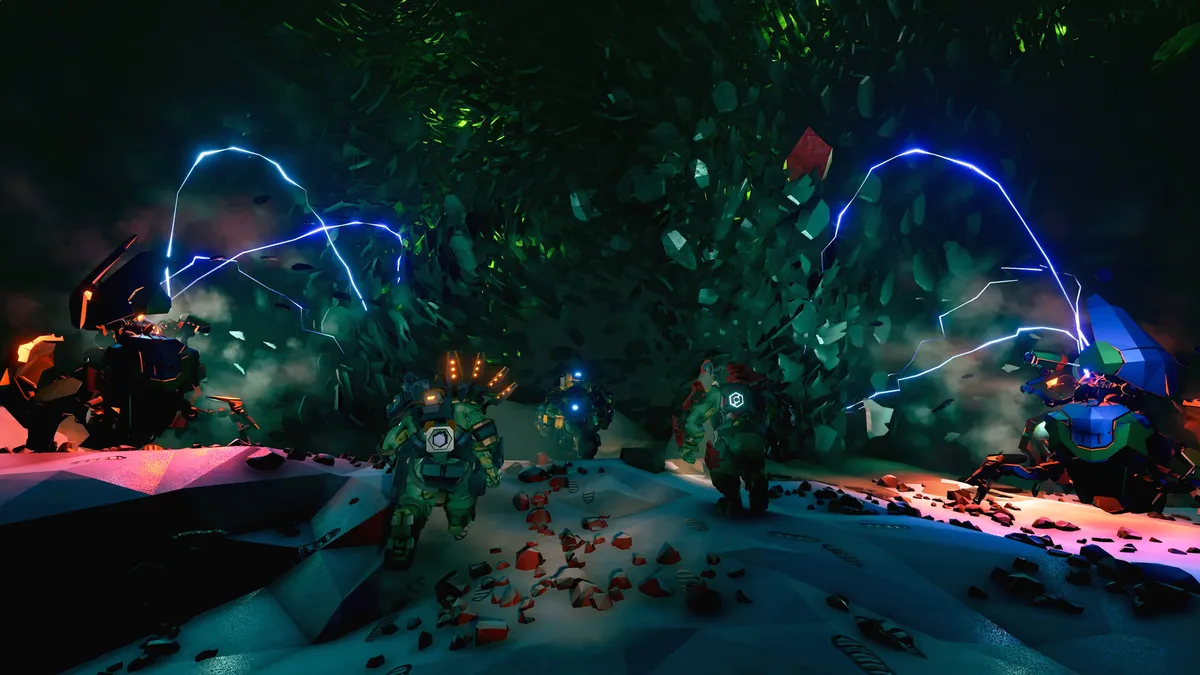
Combat Summary
The best of all Artifacts in Rogue Core right now is Nuclear Optics: enemies caught in your flashlight beam take 30 Radiation damage per second, which turns a tool you already use constantly into free damage on every priority target. Official: Update 2 added Nuclear Optics with exactly that effect (full Steam patch notes RC:EA:02.00.00). Everything else in the pool is harder to rank honestly: the game files contain 22 active Artifact definitions (names like Bastion, Frenzy, Glass Cannon, Nuclear Gaze, Symbiotic, and Adrenaline Booster), but their individual effects are not publicly confirmed. Community-tested: Artifacts come from picking a specific Risk Vector so a Sentinel Specter spawns, killing it for a Specter Core, and loading that core into the R.E.P.D. to pick your Artifact — or from Update 2’s classified experiment event, which hands you a free Artifact for reactivating dead machinery. This Artifact Tier List ranks what is confirmed by measured effect, and ranks the datamined names by design archetype, marked honestly.
S Tier — Nuclear Optics
Official: Nuclear Optics is the one Artifact with publicly confirmed mechanics: 30 Radiation damage per second to any enemy inside your flashlight beam. That is not situational damage — it is passive, always-on damage attached to aiming your light, which you do in every fight anyway.
Why it sits alone at the top:
- Free damage has no opportunity cost. Unlike upgrades that compete for Expenite or weapon slots, the beam damage rides along with whatever build you are already running. Bolt-action sniper, LOK-1 spray, pickaxe brawler — all of them get 30 Radiation/sec extra on the thing you are looking at.
- It scales with skill, not gear. Better beam tracking on priority targets means more of the run’s total damage comes free. On bosses and elites, where fights last long enough for damage-over-time to matter, the beam quietly becomes one of your biggest damage sources.
- Speculation: The game files contain an internal Artifact name, Nuclear Gaze, that almost certainly corresponds to Nuclear Optics. If that naming ever surfaces in-game, don’t treat it as a second Artifact — it is the same one.
A Tier — Glass Cannon, Frenzy
Datamined (game files): Both names exist in the active Artifact definitions; their exact effects are not publicly confirmed. Community-tested: Players report that some Artifacts “significantly change gameplay,” and these two sit in that design space by every signal their names send.
Glass Cannon reads as the classic offense-for-survivability trade: more damage output in exchange for taking more (or having less health). In a roguelite where runs end in burst damage spikes, trading survivability for kill speed is the highest-ceiling play in skilled hands — dead enemies deal no damage. It earns A tier because the archetype it belongs to warps your entire run’s decision-making, which is what top-tier Artifacts should do.
Frenzy reads as a tempo accelerator: effects that reward or sustain aggressive play (attack speed, move speed, or damage that ramps as you stay in the fight). In-game verified: Rogue Core’s mission timer already punishes slow play — Reaperworms arrive when it expires — so anything that makes you faster at killing is secretly a timer-management tool. Frenzy’s archetype helps on the two axes that matter: killing faster and reaching the elevator sooner.
B Tier — Bastion, Symbiotic, Adrenaline Booster
Datamined (game files): All three are in the active definitions; effects unconfirmed. Community-tested: Other Artifacts “just provide stat boosts,” and these names point squarely at that category.
Bastion reads as the defensive answer — damage reduction, extra armor, or survivability on a trigger. Solid, unexciting, and honest: it keeps you alive without changing how you play. B tier because survival stats have a real but capped value; they don’t open new strategies.
Symbiotic reads as a sharing or sustain effect — something that links you to teammates or converts one resource into another. In 4-player runs, team-linked Artifacts punch above their weight; solo, they are just okay. B tier with an A-tier ceiling in full squads.
Adrenaline Booster reads as a burst-tempo effect — speed or damage tied to a trigger like taking damage or getting kills. Useful, but trigger-dependent effects are only as good as their uptime, and uptime is the one thing the game refuses to guarantee.
C Tier — The Disabled Ones
Datamined (game files): Names like BloodAmmo, CursedMirror, and RatBastard exist in the files under a “not in use” section — 7 definitions that are not enabled in the current build.
They are C tier because they are not obtainable right now, full stop. Don’t build run plans around names from a datamine. If a future update enables them, this Artifact Tier List gets rewritten — that is the honest version of a tier list in early access.
How to Actually Get Artifacts
Knowing the tiers is useless if you never see the choices. Community-tested: the reliable Artifact path runs through Risk Vectors:
- Pick a Risk Vector that spawns a Sentinel Specter — the Specter only appears with the right Risk Vector selected, and the spawn is guaranteed.
- Kill the Sentinel Specter and take its Specter Core.
- Load the Specter Core into the R.E.P.D. — this is where you choose your Artifact.
Official: Update 2 added a second path: the classified experiment event. Reactivate the experiment mid-mission and claim an Artifact reward (explicitly not Expenite). Run it whenever the fight situation allows — a free permanent run modifier is the best trade on the map.
Picking Your Artifact: Practical Rules
- Take Nuclear Optics on sight. The one confirmed S-tier Artifact needs no deliberation: free damage, every build, every run.
- Prefer run-warping over stat-padding. When choosing between datamined archetypes, the offense-tempo names (Glass Cannon, Frenzy) have higher ceilings than the stat-boost names, because they change decisions instead of just numbers.
- Match the Artifact to your squad size. Team-linked archetypes like Symbiotic gain value with every teammate; tempo archetypes gain value in solo runs where the timer is entirely your problem.
- Don’t skip the experiment event. In-game verified: the event costs one fight’s effort and pays out for the whole run. The only runs that should skip it are strict speedruns.
The Bottom Line for Your Next Run
Nuclear Optics is the Artifact to beat, the datamined pool has real promise behind its names, and the disabled set is a reminder that early access tier lists are living documents. Farm your Specter Cores, run the classified experiment, and pick the Artifact that changes how your run plays — not the one that just adds numbers.
Fact check
- Official: Update 2 added the Nuclear Optics Artifact (30 Radiation/sec in the flashlight beam) and the classified experiment event (Artifact reward, not Expenite) — Steam patch notes RC:EA:02.00.00.
- Datamined (game files): 22 active Artifact definitions include Bastion, Frenzy, GlassCannon, NuclearGaze, Symbiotic, AdrenalineBooster; 7 definitions (including BloodAmmo, CursedMirror, RatBastard) are flagged not in use. Effects of these are not publicly confirmed.
- Community-tested: Artifacts are acquired by picking a Risk Vectors entry so a Sentinel Specter spawns, killing it for a Specter Core, and loading the core into the R.E.P.D.; some Artifacts significantly change gameplay while others only grant stat boosts.
- Speculation: Internal name NuclearGaze likely refers to Nuclear Optics; archetype readings (Glass Cannon as offense tradeoff, Frenzy as tempo, Bastion as defense, Symbiotic as team-linked, Adrenaline Booster as trigger burst) are inferred from names and are not confirmed effects.
Continue Reading
Don't deploy without all the intel. Check out this related file:
Rogue Core Artifact Event Guide: Trigger the Classified Experiment →