Rogue Core Threat Levels 1 to 3: When to Climb, What Changes
Stuck on Threat Level 1? Here is exactly what changes at Threat Level 2 and 3 in Rogue Core — enemy scaling, swarm pressure — and the checklist for knowing when you are ready to climb.
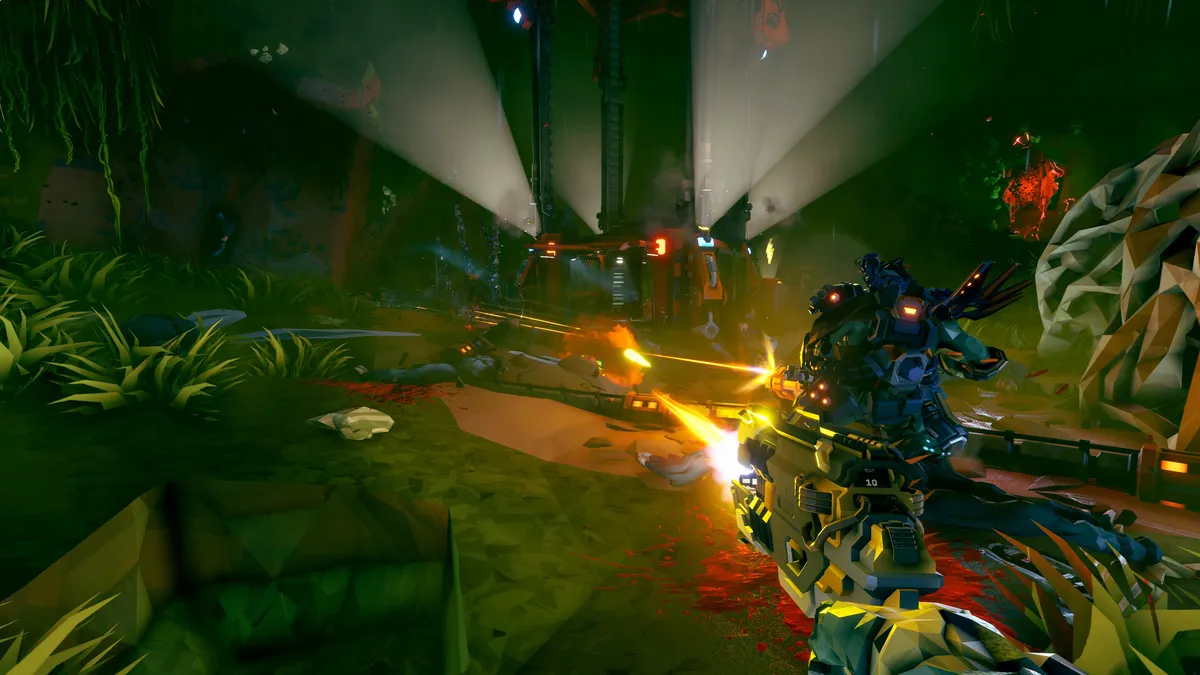
Combat Summary
Since Update 2, difficulty in Rogue Core comes from five Threat Levels, not from Depth — Depth is now purely a content progression tree (official). Each Threat Level step raises enemy count, swarm frequency, enemy HP and movement, aggression and attack frequency, projectile speed, and overall damage (official). The direct answer to “when should I climb?”: move up when you can clear your current level with most of your health pool intact and a half-built synergistic loadout — if you are scraping through with lucky drafts, the next level will punish you. Threat Levels 1–3 are the learning curve; Levels 4–5 are a different game (wave stacking becomes official at 4). Below: what actually changes at each step and how to prepare.
Threat Level 1: Learn the Systems
This is the training ground. Enemy density is low, swarm events are rare, and the Reaperworm clock (official, Update 1.2) is the only real pressure. Community-tested advice for clearing it cleanly:
- Learn one Reclaimer fully — five or six runs on a single class before branching out.
- Practice the core loop: objective → Expenite economy → elevator before the worms stack up.
- TL1 is where you learn solo play fundamentals or your co-op role. If you cannot comfortably clear TL1 with most builds, do not climb yet.
Threat Level 2: Swarms Start to Matter
What changes (official): enemy counts and swarm frequency step up, enemies hit harder and move faster. In practice, community-tested observations:
- Swarm events become run-defining: a horde during an objective phase will test your positioning and crowd control.
- Aggression and attack frequency rise — kiting windows shrink, and enemies punish standing still.
- Your draft priorities shift: area coverage and sustain outrank single-target damage for the first time.
Climb checklist: you finish TL1 runs with health to spare, you take upgrades that fix your build’s weakness instead of auto-picking damage, and you reach the elevator with the objective done rather than racing the worms.
Threat Level 3: The Build Check
What changes (official): another jump in enemy count, HP, aggression, projectile speed, and overall damage. Community-tested reality:
- TL3 is where unfinished builds fail. A pile of unrelated upgrades will not cut it — you need synergies (weapon + upgrade pairings that amplify each other).
- Enemy HP scaling means bullet-sponge fights if your damage-per-second did not keep up. If elites take forever, your damage scaling is behind the level.
- Swarm + objective overlap becomes common. Plan for add waves during every objective phase instead of hoping for clean ones.
Climb checklist: you clear TL2 without relying on lucky drafts, your builds have a defined damage engine by mid-run, and you can handle a swarm mid-objective without burning all your resources.
Why Stop at 3 (For Now)
Threat Level 4 introduces official wave stacking — stage waves can overlap, which is effectively a second difficulty dimension (official, Update 2). The jump from 3 to 4 is the biggest in the game. Treat TL1–3 as a complete education: once you clear TL3 consistently, you have the fundamentals — damage scaling, upgrade drafting, positioning under swarm pressure — that TL4+ demands in harsher form.
One Official Fact Worth Repeating
Depth does not affect difficulty. A Depth 3 mission on Threat Level 1 is a fine learning ground; a Depth 1 mission on Threat Level 4 is not (official, Update 2). Climb Threat Levels, not Depths.
Continue Reading
Don't deploy without all the intel. Check out this related file:
Rogue Core Guardian Guide: Frontline Builds and Weapons →