Guardian Threat Level 5 Guide: The Frontline Anchor for Max Difficulty
How to play the Guardian at Threat Level 5 in Rogue Core: frontline anchoring, concussive control against stacked waves, armor-restore economy, holding positions the squad cannot, and Gatekeeper tanking at max difficulty.
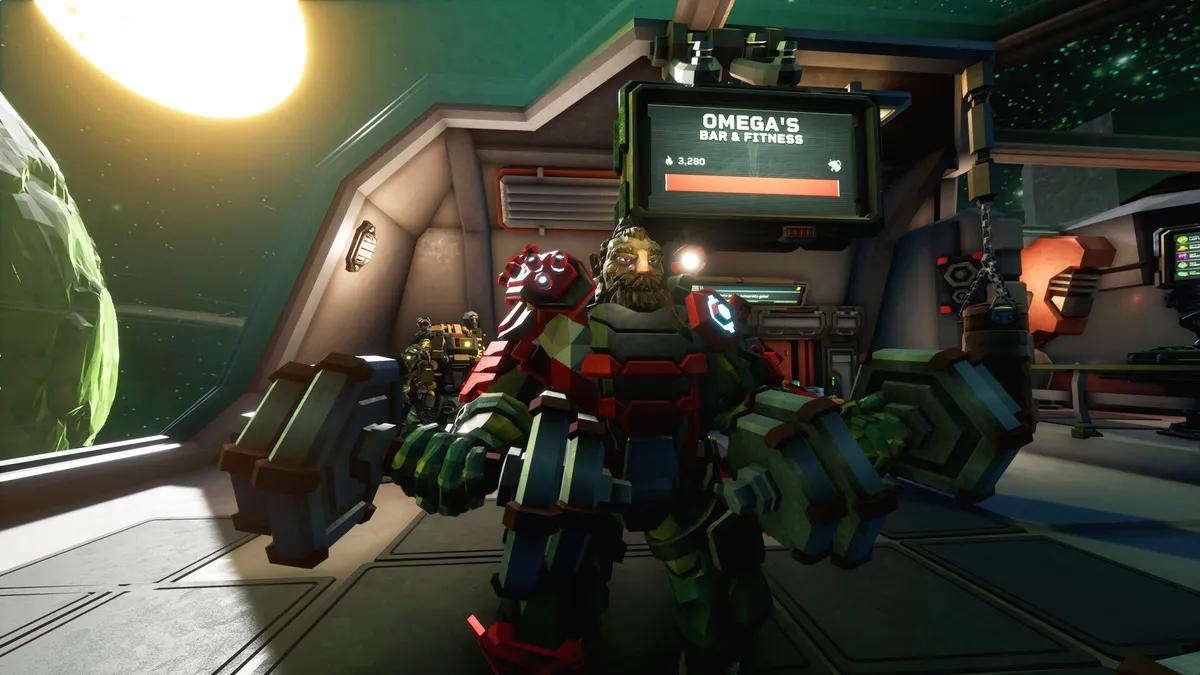
Combat Summary
- Community-tested: The Guardian anchors TL5 by standing where the squad cannot. Hold the chokepoint, stack concussive control so stacked waves never reach the backline, and treat your armor restore as a second health pool with its own economy. At Threat Levels 5, the Guardian’s job is being the wall the run is built behind.
- What it does: The Guardian is the frontline tank: area denial, concussive control, and armor restore. It is self-contained and strong Solo — community consensus (gamebrief.net, July 2026) ranks it second for solo play and third for Co-op. The Guardian does not need a squad to function, and at TL5 that independence is exactly what a squad needs from its frontline.
- How to build it: Draft concussive and area-denial tools first, armor-restore scaling second, and personal damage last — the squad brings the damage, you bring the space for it to happen. Per-player enhancement pools mean your Builds never compete with teammates’ drafts; spend yours on staying upright. The full TL5 economy is in our TL5 survival guide.
- The short answer: Play the Guardian at TL5 as the immovable object: pick one position per fight, make it yours, control the stacked waves with concussive tools, and tank the Gatekeeper while the squad works. For the ranged counterpart to this playbook, see our Falconer TL5 guide.
Why the Guardian Anchors TL5
Official: Rogue Core ships with five Reclaimer classes: Falconer, Spotter, Guardian, Slicer, and Retcon.
Community-tested: The solo consensus ranks Slicer > Guardian > Retcon > Spotter > Falconer, and the Co-op consensus runs Falconer > Spotter > Guardian > Slicer > Retcon. The Guardian is the only class that sits high on both lists — self-contained enough for solo, valuable enough for squads. That dual strength is the whole argument: at TL5, the frontline cannot be a liability the squad props up. It has to hold on its own.
Official: Update 2 (September 2, 2026) made stage waves stack on Threat Levels 4–5 — previously a bug, now an intended feature. TL5 is therefore a game about surviving double the expected enemies at once. Every other class’s TL5 plan assumes someone is holding the line so the wave does not overrun the position. The Guardian is that someone.
Concussive Control vs Stacked Waves
Community-tested: Stacked waves are the TL5-defining mechanic, and concussive control is the Guardian’s answer. You cannot kill a double wave fast enough to prevent it from reaching the backline — but you can keep it from arriving all at once. Every staggered, knocked-back, or slowed enemy is an enemy the Slicer’s damage and the Falconer’s electrical field get to kill separately instead of simultaneously.
Official: Update 2 added seven elemental Expenite upgrades, including Concussive Shot. It is the single most natural Guardian pickup in the game: it turns every shot into wave-management, and at TL5, wave management is survival.
The concussive playbook:
- Layer your control. One concussive source is a breather; two overlapping sources are a wall. Pair your weapon’s concussive effect with a throwable or an area-denial deployment so the stagger never has a gap. The Grenade Locker auto-unlocks at Alpha Clearance (official), and Impact Axes returned in Update 2 (official) — see our Grenade Locker guide.
- Control the lane, not the enemies. You cannot stagger everything in a double wave. Pick the widest approach and own it completely; let the squad’s damage handle the rest. A half-controlled wide lane beats a fully-controlled narrow one at TL5.
- Time control to the stack. Watch for the second wave’s arrival — that is when concussive tools matter, not during the first wave’s cleanup. Burning your control early means facing the stacked moment with nothing. Our TL4–5 wave-stacking survival guide covers the timing in detail.
The Armor-Restore Economy
Community-tested: The Guardian’s armor restore is a second health pool with its own economy, and TL5 is where you learn to budget it like one. The mistake is treating armor restore as a panic button — hit it when low, forget it otherwise. At TL5, the correct mental model is rations: you have a fixed number of restores per stage, and each one buys one wave.
- Spend early, not late. Restoring at 70% to stay in the fight buys more than restoring at 15% to survive it. A Guardian who drops below half is a Guardian about to be staggered out of position, and at TL5, position is everything.
- Draft restore scaling over restore frequency. Bigger restores beat more frequent small ones when the incoming damage comes in TL5-sized chunks. One full restore between stacked waves is worth three small ones mid-wave.
- Coordinate with the revive plan. If you go down at TL5, the squad’s revive attempt costs a body in the open. Staying upright is a team resource — your armor economy is the squad’s insurance policy. The Falconer’s revive-from-range is the backup; never needing it is the goal.
Speculation: armor-restore tuning is one of the systems the community watches most closely for balance changes — the Guardian’s entire TL5 viability leans on it. Nothing announced; just watch the patch notes.
Holding Positions the Squad Cannot
Community-tested: The Guardian’s signature TL5 contribution is positional: taking ground the squad cannot hold and keeping it. Three situations define the role.
Chokepoints. Every TL5 stage has one corridor the swarm must use. The Guardian’s job is standing in it. Area denial first, personal safety second — you are not kiting, you are not rotating, you are the reason the corridor stays a corridor instead of a flood.
The elevator. Official: roughly 30 seconds after the first Reaperworms appear, more spawn over time (Update 1.2), with the rate scaling by player count. The end-of-stage elevator wait at TL5 is a stacked-wave event by definition: worms plus the normal pressure, in a fixed position, with no retreat. The Guardian holds the elevator door while everyone else boards. This is the single highest-leverage Guardian moment in the game — a held elevator is a completed stage, and a broken one is a wipe.
Objectives. Mining constructions, event points, the moments the squad has to stand still and interact — the Guardian stands next to them and makes “stand still” possible. At TL5, every objective is a wave magnet; the Guardian is the magnet’s counter.
TL5 Gatekeeper Tanking
Official: Update 1.2 gave every Gatekeeper counterattacks that reduce pressure on themselves and can temporarily block some or all player attacks — and Risk Vector spawns now join the enemy pool reinforcing Gatekeepers in boss fights. Official: Update 2 removed damage-triggered boss invulnerability phases; bosses now use short blocks or blockable attacks instead.
This changed what “tanking” means. You are not standing in front of the boss absorbing hits while the squad free-hits — the counterattacks punish exactly that. TL5 Gatekeeper tanking is pressure management:
- Eat the attention, not the damage. Your job is being the boss’s problem — the target its attacks track — while staying mobile enough that the attacks miss. A Guardian the boss ignores is a Guardian contributing nothing; a Guardian the boss hits is a Guardian about to be downed.
- Track the counterattack windows. When the Gatekeeper raises its counterattack, call it and back off — the squad’s burst window is closed, and standing in it wastes the armor economy on blocked damage. The squad re-engages when the block drops. This is the TL5 version of a raid mechanic, and the Guardian is the raid leader by position.
- Handle the reinforcements. Risk Vector spawns reinforcing the boss fight are your problem, not the damage dealers’. Concussive control keeps the adds off the squad while they focus the Gatekeeper. A Guardian who chases boss damage while adds eat the backline has the priorities backwards.
Official: Ghost Ship has confirmed a fourth Gatekeeper is in development, with Depth 4 locked until it is ready — and Update 3 (targeted late October or early November 2026, not a locked date) teased a new boss. The tanking fundamentals here transfer: whatever the new fights look like, someone has to hold the line.
Build Priorities and TL5 Mistakes
Community-tested: the TL5 Guardian draft order is control first, armor second, damage last. Concussive Shot and area-denial tools from the Update 2 elemental pool; armor-restore scaling; and whatever damage comes along for free. If a pick does not help you hold a position or control a wave, it can wait.
The mistakes that end TL5 Guardian runs:
- Chasing kills. Every step out of position is a step the next stacked wave walks through. The Slicer kills things; you make killing possible. Our class tier list covers the division of labor.
- Restoring too late. The armor economy only works if you spend before the crisis. Panic restores at 10% are how Guardians die with restore charges unspent.
- Tanking the boss’s damage instead of its attention. Counterattacks punish face-tanking. Be the target, not the punching bag.
- Ignoring the adds in boss fights. Risk Vector reinforcements are your assignment. The Gatekeeper dies to the squad; the squad survives because of you.
- Drafting damage out of boredom. The Guardian’s damage will never match a Slicer’s, and every damage pick is a control pick you did not take. Boredom is not a draft strategy.
Community-tested: Expenite flows from veins, events, and enemy drops — the Guardian spends it on the R.E.P.D. upgrades that keep the line held: concussive and elemental scaling, armor, sustain. Our Expenite farming guide covers the income; the Guardian’s rule is simple — if it does not help you survive the next stacked wave, someone else can buy it.
Verification status: class rankings from community consensus (gamebrief.net, July 2026); TL4–5 wave stacking, the seven elemental Expenite upgrades, Grenade Locker auto-unlock at Alpha Clearance, Impact Axes returning, Gatekeeper counterattacks, Risk Vector reinforcement spawns, boss invulnerability removal, and the ~30-second Reaperworm escalation are official patch facts; armor economy, positioning doctrine, and boss-tanking tactics are community-tested. Updated October 24, 2026.
Continue Reading
Don't deploy without all the intel. Check out this related file:
Falconer Threat Level 5 Guide: Winning TL5 as the Weakest Solo Class →