Slicer Threat Level 5 Guide: Solo Execution at Max Difficulty
How to play the Slicer at Threat Level 5 in Rogue Core: melee execution in stacked waves, Gatekeeper pressure, Expenite spending, and the mistakes that end TL5 Slicer runs.
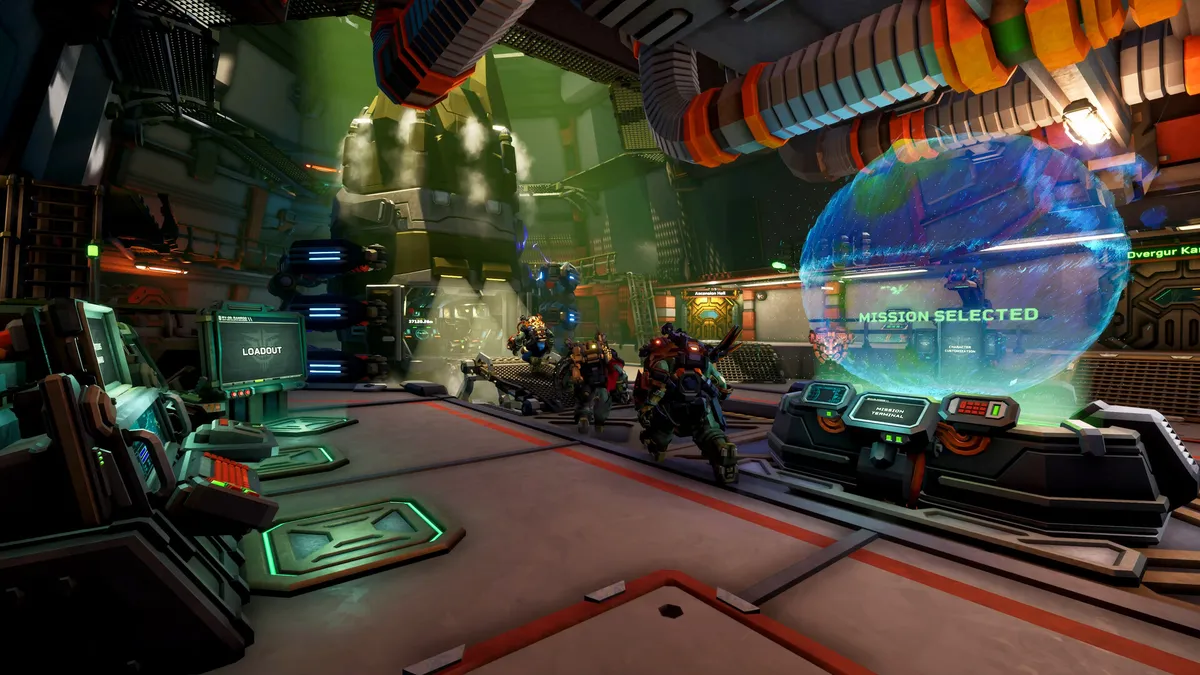
Combat Summary
- The Slicer wins at Threat Levels 5 by deleting the most dangerous enemies before they can attack, not by outlasting them. At max difficulty, stacked waves punish hesitation, so every engagement must end with a clear kill, a clean exit, or both.
- What sets the Slicer apart from the other four classes is range: it must stand closest to the danger to do its work. The Guardian can hold ground, the Spotter and Falconer can fight from distance, and the Retcon can lean on a different toolkit, but the Slicer has no safe distance. Its survival is its damage.
- The Solo plan is simple to state and hard to execute: pick one target, remove it fast, move before the next wave lands on you, and spend Expenite on options that help you kill faster or escape cleanly.
Why the Slicer tops the solo ranking at TL5
Community consensus ranks the Slicer first for solo play and fourth for co-op (Community tested). The solo order is Slicer, then Guardian, Retcon, Spotter, and Falconer, while the co-op order is Falconer, Spotter, Guardian, Slicer, and Retcon. Solo play rewards self-sufficiency: a solo Slicer does not need a teammate to create space or finish a target it softened. It closes distance, removes a threat, and resets.
At Threat Level 5, that advantage sharpens. A class that needs time and distance will spend more of the fight retreating, while the Slicer is built for enemies already close and waves already overlapping. Its close-range melee focus, centered on an energy blade and aggressive target deletion, turns that pressure into an opening, provided the player commits fully and then leaves on time. First place for solo does not mean easiest: the Slicer’s ceiling is highest when played cleanly, and a mistimed engagement costs it more than a ranged class, because it is already inside the threat when the mistake happens.
Melee execution in stacked waves
Stage waves can stack on Threat Levels 4–5 (Official, Update 2, September 2, 2026). What was previously a bug is now an intended feature, so plan for overlap. When a second wave arrives before the first is cleared, stop trying to clear everything, and remove the enemies that will hurt you next.
Engage with a single target in mind, commit to deleting it, and do not drift into a second target halfway through. Half-finished targets stay alive, keep attacking, and punish you while you are committed to the next swing. Disengage on a rule, not on a feeling: leave when your target is dead and the next wave is arriving, when you have drawn more enemies than you can delete before they surround you, or when your position has no clear exit. Treat retreat as part of the damage rotation, not as failure.
Order your targets simply. First, remove anything that can lock you down or burst you down. Second, remove enemies that reinforce a Gatekeeper fight. Third, clear stragglers only when the wave is thinned enough that you will not be surrounded doing so. If two waves merge and you are no longer deleting faster than enemies arrive, break contact, reposition to a choke point, and re-engage on a smaller slice of the fight. For a broader framework, see the Threat Level 5 complete survival guide, and for the class baseline, see the Slicer guide and best builds for solo play.
The TL5 Slicer draft
Enhancement pools are per-player (Official), so in co-op your draft never competes with teammates’ drafts. In solo, no teammate draft covers a gap you leave. These Builds follow three priorities, in order: melee burst, dismemberment and target deletion, and a clean way out when a fight turns.
Melee burst comes first, because the Slicer lives or dies on kill speed. If your opening engagement does not end a target quickly, the stacked wave catches up with you. Dismemberment and target deletion come second: removing a limb, a weapon, or a threat outright reduces the damage coming back at you. That is the Slicer’s defence. It is not armour, and it is not distance. Your escape option comes third, but it is not optional: every TL5 draft needs a way to break contact after a kill, when the next wave arrives.
Expenite flows from veins, events, and enemy drops (Official). Spend it on faster deletion and safer exits, not spread thinly across options that help neither. Seven elemental Expenite upgrades were added in Update 2 (Official), including Spark-Booster, Grid-Shock, Concussive Shot, and Frostbane. Choose the element that solves the threat in front of you. The Grenade Locker auto-unlocks at Alpha Clearance, and Impact Axes returned in Update 2 (Official). Judge both the same way: do they help you delete a priority target faster, or leave cleanly? If neither, skip them for that run. For deeper execution detail, see the Slicer advanced guide for solo execution.
TL5 Gatekeeper fights as a Slicer
Every Gatekeeper has counterattacks that reduce pressure on themselves and can temporarily block some or all player attacks (Official, Update 1.2). You cannot stay on the boss and swing until it falls. Attack in windows, respect the counterattack, and back off before the boss turns your aggression into punishment. Boss damage-triggered invulnerability phases were removed in Update 2 and replaced by short blocks or blockable attacks (Official). A short block is a pause, not an invitation to keep swinging into a counterattack.
Risk Vector spawns join the enemy pool reinforcing Gatekeepers in boss fights (Official, Update 1.2). Your job is triage: delete the adds that punish you fastest, keep the boss in view, and return to the boss only when add pressure is thinned enough that you will not be surrounded while attacking it. Roughly 30 seconds after the first Reaperworms appear, more spawn over time, with the rate scaling by player count (Official, Update 1.2). That timer punishes slow boss fights, even in solo. Speed up the boss windows, thin the adds faster, or accept that this attempt needs a cleaner opening. Never stand where the boss and the adds can hit you at the same time if you can avoid it, and never chase the boss into a corner where adds can trap you.
Duo and squad roles
In a duo or squad, the Slicer covers what ranged classes cannot: fast deletion of close threats, pressure on enemies that dive your back line, and cleanup of targets that survive the opening volley. If a Falconer or Spotter is holding distance, the Slicer stops enemies from closing that distance for free. If a Guardian is holding ground, the Slicer removes threats the Guardian cannot chase without abandoning position.
What the Slicer needs from teammates is space created before it commits, not rescue after it is already surrounded. A teammate who thins a wave, draws fire, or holds a lane for a few seconds gives the Slicer the opening it needs to delete a priority target and leave. Keep calls simple: name the target you are deleting, name when you are leaving, and name when you need help. Compare the other TL5 class guides before settling a squad composition: the Falconer Threat Level 5 guide, the Guardian Threat Level 5 guide, and the Spotter Threat Level 5 guide.
Five mistakes that end TL5 Slicer runs
First, staying for one more kill. The most common TL5 Slicer death is a successful kill followed by a refusal to leave. The next wave arrives while you are still in place, and you are surrounded before you can reset. Leave on the kill, not after the next swing.
Second, engaging without an exit. If you cannot name your escape route before you swing, do not swing. TL5 waves stack, Gatekeepers counterattack, and adds arrive on a timer.
Third, splitting damage across targets. Hitting three enemies once each leaves three enemies able to hit you back. Hitting one enemy until it is gone leaves two. Finish targets.
Fourth, ignoring the boss counterattack. Gatekeeper counterattacks temporarily block some or all player attacks (Official, Update 1.2). Swinging through a counter window wastes your burst and leaves you in range of the punish.
Fifth, spending Expenite without a plan. Every Expenite choice should answer one question: does this help me delete the next priority target faster, or leave the next bad fight cleanly? If it does neither, it is not a TL5 pick.
When NOT to bring the Slicer to TL5
Do not bring the Slicer to TL5 if you want to fight from distance, hold a static position, or outlast waves without moving. Those are valid playstyles, but they belong to other classes. The Slicer is the TL5 class that must be closest to the danger, and its survival comes from deleting threats before they hit, not from tanking (Community tested). If that premise does not appeal to you, the class will feel punishing no matter how strong its solo ranking looks.
Do not bring the Slicer to TL5 if you are unwilling to retreat, or as a squad’s only answer to every problem. Retreat is the core loop, not a backup plan. In co-op, the Slicer ranks fourth (Community tested), so bring it for fast, close deletion of priority threats and let teammates cover the rest. Finally, do not expect Update 3 to fix its weaknesses. Update 3 is targeted for late October or early November 2026 by Ghost Ship, a target rather than a locked date, and the Update 2 meta in this guide is the live game (Official target, Community tested tactics). The class tier list for solo and co-op play puts this ranking in full context.
Verification note
Official patch facts in this guide are the Update 2 changes to stacked waves, elemental Expenite upgrades, and boss blocks; the Update 1.2 Gatekeeper counterattacks, Risk Vector reinforcements, and Reaperworm spawn timing; and the per-player enhancement pools, Expenite sources, Grenade Locker unlock, and Impact Axes return. Solo and co-op rankings, melee execution rules, draft priorities, Gatekeeper tactics, and the honest limits in the final section are community-tested advice, not official statements. Update 3 is described only as a target date, not as a confirmed release.
Continue Reading
Don't deploy without all the intel. Check out this related file:
Rogue Core Slicer Guide: Best Builds for the Solo S-Tier Class →