Rogue Core Solo Guide: How to Survive and Win Alone
Can you play Rogue Core solo? Yes — pick the Slicer or Guardian, start on Threat Level 1-2 with Cautious pace, and respect the Reaperworm timer. Full solo survival guide.
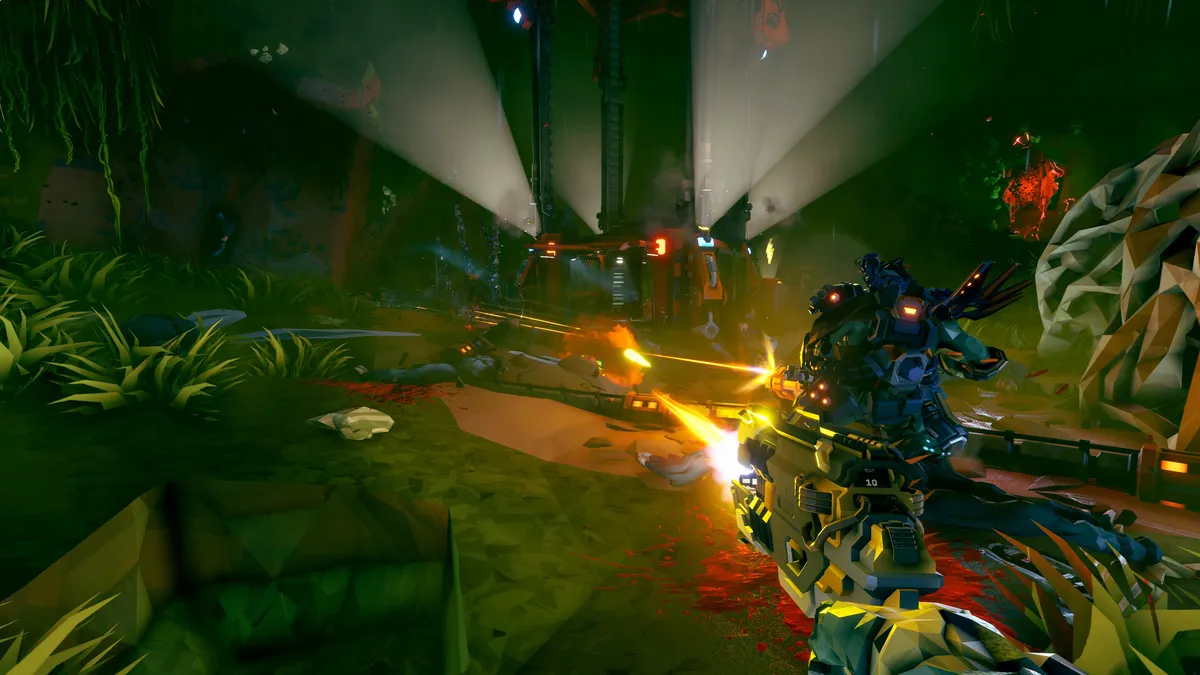
Combat Summary
The direct answer: Yes, Rogue Core is fully playable solo — but you should build for it on purpose. Pick the Slicer for speed or the Guardian for forgiveness, start on Threat Level 1–2 with Cautious Assault Pace, draft defensive upgrades early, and get on the elevator before the Reaperworm escalation hits around 30 seconds after the first worms appear. Solo runs fail for predictable reasons: wrong Reclaimer, too-high Threat Level, greedy upgrade drafts, and staying on the ground too long. Fix those four and most solo runs become consistent clears.
The Solo Tier Reality
Community-tested (consensus reported by gamebrief.net, July 2026): the Reclaimer tier list splits hard by mode. Solo: Slicer > Guardian > Retcon > Spotter > Falconer. This is nearly the mirror image of co-op, where Falconer and Spotter dominate. The reason is structural: solo removes everything that makes team classes valuable. Nobody benefits from the Falconer’s squad-wide buffs, nobody acts on the Spotter’s information, and nobody revives you when a greedy play goes wrong.
If you only remember one thing from our Rogue Core beginner guide: the best solo Reclaimer is the Slicer, full stop. It kills fast, sustains itself, and does not need coordination to function. The Guardian is the honest second choice — slower clears, but it forgives the single mistake that ends a solo run. Check the full solo play class rankings before you commit to a main.
Community-tested: All five Reclaimers are available from your first dive — there is no class to unlock before you can start practicing solo.
Threat Levels: Start Lower Than Your Ego Wants
Official (Update 2, September 2026): Rogue Core uses five Threat Levels that scale enemy count, swarm frequency, enemy HP and movement, aggression and projectile speed, and overall damage. Depth is now purely a content progression tree — it no longer affects difficulty. This is the single most important official fact for solo players, because it means you control difficulty through the Threat Level setting, not by avoiding content.
The solo rule is simple: clear Threat Level 1 comfortably before touching 2, and do not rush 3. Our Threat Levels 1–3 climb guide covers exactly when to move up and what changes at each step. Two structural facts make climbing mandatory rather than optional:
- Official (Update 2): on Threat Levels 4–5, stage waves can stack — a former bug turned official feature. Stacked waves are the endgame wall, and they punish solo players who climbed on gear alone without learning positioning.
- Official (Update 1.2): every Gatekeeper has counterattacks that can temporarily block some or all of your attacks while pressuring you. Solo, a counterattack you do not respect is a dead run, because there is no teammate to cover the punish window.
Assault Pace: Pick Cautious, Actually
Official (Update 1): you pick an Assault Pace — Cautious, Standard, or Reckless — from the mission map. This was the developers’ answer to the launch-era mission timer controversy, and for solo players it is a free difficulty dial most people ignore.
Cautious is the correct solo default. Solo runs are lost to attrition, not to the clock: fewer simultaneous threats means your single damage output and single pair of eyes can actually keep up. Reckless solo is a valid challenge mode, not a farming strategy. Standard is fine once you are clearing Cautious without using your safety nets. The matchmaking-friction debates on the forums are a co-op problem — solo, the pace choice is entirely yours, so there is no reason to pick anything but what your current skill supports.
Upgrade Drafting: Defense First, Greed Never
Official (Update 1): any Reclaimer can activate an R.E.P.D. upgrade once there is enough Expenite, and all players receive the upgrade simultaneously — the negotiation rework also replaced a picked upgrade with a new option so everyone gets equal choices. Solo, “everyone” is you, which simplifies drafting to one question: does this keep me alive?
Community-tested drafting priority for solo:
- Survivability first. Health pool, damage reduction, healing-on-kill effects. Solo has no revives; effective HP is your entire margin.
- Sustain second. Ammo economy and reload-adjacent effects. Solo, you cannot borrow a teammate’s damage while you reposition — your gun must always be ready.
- Damage third. Once you stop dying, damage is how you shorten the windows where things can go wrong.
- Utility last. Movement and quality-of-life picks are win-more, not win-condition.
Community-tested: Enhancement pools are per-player with no shared deck, so your drafts do not dilute anyone else’s — and nobody else’s drafts save you either.
The Elevator Is the Real Boss
Official (Update 1.2): roughly 30 seconds after the first Reaperworms appear, additional worms spawn over time at a rate that scales with player count. Community-tested: solo, this is a hard timer on extraction. The worms are not a fight you win for profit; they are a signal to leave.
Build the habit: when the ground starts rumbling, you are already moving toward the elevator. The most common solo death in the community is not a boss — it is a player who “had one more node to mine” during the worm escalation. Set a personal rule (leave at the first worm, no exceptions) until your clears are routine, then loosen it.
Official (Update 1.2): disconnect insurance means a crashed or disconnected run keeps the XP and bonuses earned up to that point. This removes the sting of technical failures, but it does not save a run you threw by overstaying — play like every run counts, because your time does.
Boss Fights Alone: Patience Over DPS
Gatekeeper fights solo are a different game from co-op. Official (Update 2): damage-triggered invulnerability phases are gone — bosses now do short blocks or blockable attacks instead — but the Update 1.2 counterattacks remain. The solo boss routine:
- Learn the counterattack tells before you learn the damage rotation. One blocked burst is recoverable; one punished burst into a combo is not.
- Save your strongest consumables and burst windows for after the boss’s block, not before it.
- Positioning beats damage. Solo, you are always the boss’s only target — there is no aggro to share, so every attack is aimed at you by definition.
Solo Loadout Checklist
Before each solo dive, confirm:
- Reclaimer: Slicer (speed) or Guardian (safety)
- Threat Level: the highest you clear comfortably, not the highest you have survived once
- Assault Pace: Cautious until clears are routine
- Mindset: defensive drafts first, elevator at the first worm, bosses are patience checks
FAQ
Can you play Rogue Core solo? Yes. The full game is playable alone with no co-op requirement. Solo has its own meta: Slicer and Guardian are the top picks, Threat Levels 1–2 with Cautious pace is the learning zone, and defensive upgrade drafting matters more than in co-op (community-tested).
What is the best solo class in Rogue Core? The Slicer — S-tier solo by community consensus (gamebrief.net, July 2026). It combines fast clear speed with self-sufficiency. The Guardian is the safer alternative for players who prefer surviving over speedrunning (community-tested).
What Threat Level should I play solo as a beginner? Threat Level 1. Depth no longer affects difficulty (official, Update 2), so Threat Level is your difficulty dial. Climb only when clears feel routine — see our Threat Levels 1–3 climb guide for the exact signals.
Do I keep anything if I disconnect during a solo run? Yes — disconnect insurance (official, Update 1.2) preserves the XP rewards and bonuses earned up to an abrupt mission end, whether from a crash, disconnect, or kick.
Is solo harder than co-op in Rogue Core? Different, not strictly harder. Co-op multiplies both damage and chaos; solo is fully predictable but entirely unforgiving — one mistake with no revives ends the run. Most players find solo easier to learn on and co-op easier to push high Threat Levels with (community-tested consensus).
Continue Reading
Don't deploy without all the intel. Check out this related file:
Deep Rock Galactic Rogue Core vs DRG: 7 Key Differences Explained →