Rogue Core Artifacts Guide: How They Work and When to Take Them
What are Artifacts in Rogue Core? Run-changing pickups drafted during missions — how the Artifact event works, what Nuclear Optics does, and when to take one over Expenite upgrades.
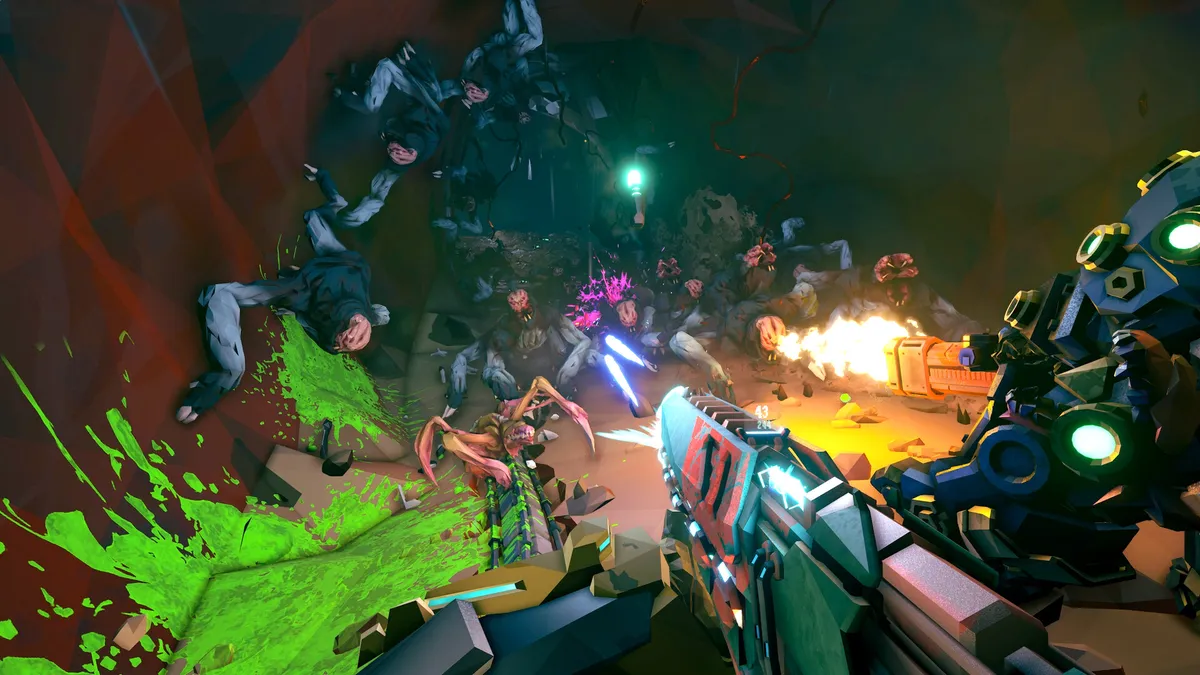
Combat Summary
The direct answer: Artifacts are powerful run-defining pickups you draft during Rogue Core missions — each one changes how you play for the rest of that run, and none of them carry over between runs. You get them from the Artifact event (reactivating a classified experiment) and other in-run sources. The standout example: Nuclear Optics (added in Update 2) makes enemies in your flashlight beam take 30 Radiation damage per second — free damage for simply aiming at things. Take an Artifact when it multiplies what your build already does; skip it when it asks you to play a different game than the one your upgrades support.
What Artifacts Actually Are
Community-tested: Artifacts sit one tier above normal upgrades in Rogue Core’s roguelite structure. Regular Expenite upgrades tune your numbers — more damage, more health, better sustain. Artifacts change your behavior. They are drafted during the run, they are temporary (nothing persists between runs — that is the roguelite deal), and a single Artifact can be the difference between a build that works and a build that dominates.
Official (Update 2, September 2026): the Artifact pool is a real, finite system — the Update 2 hotfix RC:EA:02.02.00 fixed a case where the game hung when the Artifact pool ran dry in 4-player runs. That tells you two useful things: Artifacts are drawn from a shared pool per run, and in full squads the pool can actually empty. Solo players will rarely hit this; 4-player groups drafting aggressively can.
If you want raw rankings rather than mechanics, our Rogue Core Artifacts tier list rates every Artifact — this guide covers how the system works and the decision logic for taking or skipping one.
The Artifact Event: How to Get One
Official (Update 2): a new Artifact event was added — reactivate a classified experiment and earn an Artifact reward (not Expenite). This is the most reliable Artifact source in the game: it is a deliberate objective you choose to pursue, not a random drop.
Community-tested event advice:
- Prioritize the event early. An Artifact shapes your whole run, so the earlier you have it, the more value you extract. Detouring for it in the first stages beats finding one late when your build is already locked in.
- Bring the team. In co-op, the experiment site is a known fight location — enemies converge on objectives. Solo, clear the area first; the event is not timed, but dying to a swarm you could have cleared is embarrassing.
- Know what you are giving up. Time spent on the event is time not mining Expenite or pushing the objective. On Cautious pace this trade is free; on Reckless pace, weigh it — the timer pressure is real.
Nuclear Optics: The Example That Explains Everything
Official (Update 2): Nuclear Optics — enemies in your flashlight beam take 30 Radiation damage per second. One sentence, and it teaches the whole Artifact philosophy: the Artifact does not ask you to press a new button or learn a combo. It turns something you already do (aim at enemies) into damage you were not dealing before.
That is the test for every Artifact: does it multiply what I already do, or does it demand a new playstyle? Nuclear Optics multiplies aiming — every build aims. An Artifact that rewards a playstyle your upgrades do not support (say, melee bonuses on a gun-focused draft) is a trap pick: individually strong, wrong for this run.
Community-tested: beam and aura-style Artifacts scale with positioning skill, not with gear. New players get modest value; experienced players who already track enemy positions get enormous value from the same Artifact. This is why Artifact rankings differ between builds focused on raw damage and builds focused on control — the Artifact tier list assumes you can use what you draft.
When to Take an Artifact vs. Expenite Upgrades
The real decision is rarely “Artifact or nothing” — it is “Artifact or the Expenite upgrades I could buy instead.” Community-tested decision rules:
- Take the Artifact when it matches your draft direction. Gun build offered a gun-multiplying Artifact? Take it immediately. Synergy beats raw power in every roguelite ever made, and Rogue Core is no exception.
- Take it when your build is already functional. If your damage and sustain are solved, an Artifact is pure upside — it adds a new dimension instead of fixing a broken one.
- Skip it when your build has a hole. An Artifact does not fix “I die to swarms” or “I have no ammo sustain.” Expenite upgrades that patch your weakness first; take the Artifact next time.
- Skip it when it fights your draft. The wrong Artifact is worse than no Artifact — it tempts you into plays your build cannot support. Discipline is a skill.
- In co-op, coordinate. Official (Update 1): R.E.P.D. upgrades are shared to the whole team once anyone can afford them, but Artifacts are individual picks. Do not let two players draft Artifacts for the same role — one player’s multiplier plus another player’s multiplier on different axes beats two players fighting over the same one.
Artifacts and the Update 2 Meta
Official (Update 2): seven elemental Expenite upgrades joined the pool (Spark-Booster, Grid-Shock, Weathering Blast, Icy Shrapnel, Icicle Strike, Concussive Shot, Frostbane), and our Update 2 weapon changes breakdown covers the winners and losers. Artifacts interact with this meta in one important way: elemental upgrades reward hitting many enemies, and several Artifacts reward being near / aiming at / killing enemies — the overlap is where the strongest runs live.
Community-tested: the highest-performing runs pair an enemy-density Artifact with the elemental upgrade pool. More enemies affected by your Artifact means more value per second, which is also why these builds want higher Threat Levels once the player can survive them — difficulty becomes fuel.
Speculation: Update 3 is targeted for late October 2026 with a new boss teased, and the Experimental branch is testing enemies dropping Expenite as a core feature. If the economy shifts, Artifact-versus-upgrade math shifts with it — expect this guide to be revised when Update 3 lands.
FAQ
What are Artifacts in Rogue Core? Powerful run-defining pickups drafted during missions. Each changes how you play for the rest of that run; none persist between runs. The reliable source is the Artifact event (reactivate a classified experiment), added officially in Update 2 (community-tested mechanics, official event).
What does Nuclear Optics do? Enemies in your flashlight beam take 30 Radiation damage per second (official, Update 2). It turns aiming — something every build does — into free damage, which is the template for judging every Artifact: does it multiply what you already do?
Should I take an Artifact or Expenite upgrades? Take the Artifact when it matches your draft direction and your build has no holes; buy Expenite upgrades first when you have a weakness (survivability, ammo) to patch. The wrong Artifact for your build is worse than no Artifact (community-tested).
Can the Artifact pool run out? Yes — officially. The Update 2 hotfix RC:EA:02.02.00 addressed the game hanging when the Artifact pool ran dry in 4-player runs, confirming the pool is finite per run. Solo players effectively never hit this; aggressive 4-player drafters can (official).
Do Artifacts carry over between runs? No. Rogue Core is a roguelite: Artifacts, like Expenite upgrades, are temporary within a run. Permanent progression between runs exists at the account level, but your Artifact goes away when the run ends (official game structure, community-tested).
Continue Reading
Don't deploy without all the intel. Check out this related file:
Rogue Core Glass Cannon Artifact: Is the Damage Worth the Risk? →