Hammercaster Guide: Best Builds, Burst Fire Alternatives and Upgrades
The Hammercaster lost Burst Fire in Update 2, so this guide rebuilds it for sustained wave-clear, solo and co-op play, and Threat Levels 4-5 stacked waves.
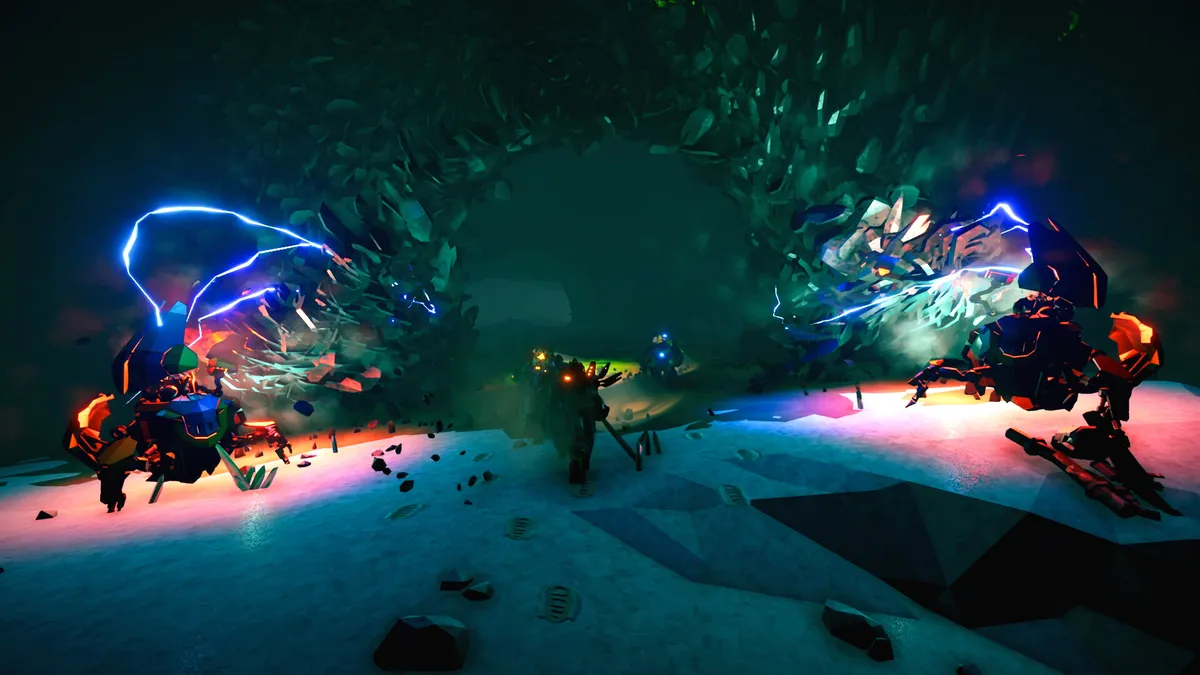
Combat Summary
- After Update 2, the Hammercaster is good for one job above all others: sustained, close-to-mid-range wave-clear. It holds a lane, chews through packed enemies, and keeps pressure on while your team works. It is no longer a burst weapon, and guides that still treat it as one are out of date.
- Burst Fire’s removal lowered peak burst, not the weapon’s role. Steady fire, good positioning, and ammo discipline now matter more than one big burst window. Players who keep playing it as a burst weapon will feel weak, while players who rebuild around sustained fire will find it still earns its slot.
- In Rogue Core, it shines when waves arrive in numbers, especially on Threat Levels 4 and 5, where Wave Stacking is now official and stage waves pile on top of each other. It is a lane-holding weapon for stacked waves, not a boss-melting weapon for Gatekeeper fights.
- Solo players should take it for forgiving, ground-holding room clears. Co-op teams should take it when one player anchors a choke point while teammates cover flanks and burst damage.
What actually changed in Update 2
Update 2 went live on September 2, 2026, and it changed the Hammercaster in one clear way: the weapon lost Burst Fire.
The same update changed the game around the weapon. Threat Levels replaced the old difficulty setup with a five-level scale covering enemy count, swarm frequency, enemy health and movement, aggression and attack frequency, projectile speed, and overall damage. Depth is now purely a content progression tree and no longer affects difficulty. Wave stacking on Threat Levels 4 and 5 went from a bug to an official feature, so stacked waves are now a designed part of the endgame. Boss invulnerability phases were removed in favour of short blocks or blockable attacks, so sustained pressure always does something. Rifts now spawn and follow per wave, and the Expenite cost cap was replaced with plus-100 scaling past the soft cap. Ammo economy stays a real constraint.
What the Hammercaster does now
Its job is to turn a crowded corridor into an empty one, steadily, without needing a perfect setup. Pick a position with a retreat route, fire in controlled stretches rather than emptying the magazine in one hold, and reload during lulls instead of during a swarm.
Range and target discipline decide most fights. The weapon earns its keep at close to mid range, covering a choke point or doorway; at long range it wastes ammo. Clear small, fast enemies first so they stop blocking your movement, then grind down tougher enemies while your team handles the biggest threats.
Build 1: the wave-clear anchor
This is the default build, and the one most players should start with. Its goal is simple: hold a lane through stacked waves without running dry. Spend early upgrades on sustain and ammo economy rather than chasing damage spikes.
Play it by standing where the wave must funnel toward you, such as a doorway, a narrow tunnel, or a gap between obstacles. Let the wave come to you instead of pushing into it. Fire in steady stretches, pause to reload when the flow thins, and call out when you need a teammate to cover you during a reload. In co-op, this build works best when one teammate watches your flank and another handles burst damage, because your job is volume, not single-target deletion.
The new Update 2 Expenite upgrades give this build useful options at the strategy level. The elemental pool added in Update 2 includes Spark-Booster, Grid-Shock, Weathering Blast, Icy Shrapnel, Icicle Strike, Concussive Shot, and Frostbane. Which of these pairs best with the Hammercaster in a given run is community-tested guidance, not an official pairing, so test one change at a time and keep what actually helps.
Build 2: the boss-phase pressure build
This build keeps the Hammercaster useful when a Gatekeeper fight starts. Its goal is not to melt the boss, because that is not what this weapon does best, but to keep constant pressure on the boss and its supporting enemies while your team delivers the heavy hits. With invulnerability phases gone, sustained fire now always contributes, and a Hammercaster that never stops firing is genuinely useful in a boss fight.
Stay mobile and near cover. Bosses now use short blocks and blockable attacks, so keep firing through the windows between blocks, and clear smaller enemies before they box you in. Extra enemies can join the pool assisting Gatekeepers, so a boss fight can suddenly gain numbers, and your wave-clear strength becomes your safety net. Spend upgrades on staying alive and firing, sustain, movement room, and ammo economy, rather than raw damage, because a dead anchor deals no damage at all.
Build 3: the co-op support anchor
This build is for full teams that already have burst damage covered and need reliability instead. Its goal is to make the whole team safer: hold ground, control space, and never be the player who needs rescuing.
Communicate constantly. Call your reloads, call when a wave is stacking, and call when you are falling back so your team falls back with you. Position yourself where you can see both your team and the incoming wave, and avoid the lone-hero spot at the front of a cave where no one can reach you. Upgrade spending should favour the team: sustain and ammo economy first, then anything that helps you hold a position longer. If your team debates a damage spike against a sustain option before a stacked-wave stage, take sustain.
Solo versus co-op: how the weapon changes
Solo play changes the Hammercaster’s risk profile. Without teammates to cover your reload or watch your flank, every position must have an escape route, and every reload must happen before the next wave arrives, not during it. Solo players should favour the wave-clear anchor build, play conservatively, and accept that some fights are better kited than held.
Co-op play lets the Hammercaster specialise. With teammates covering flanks and burst damage, the anchor can commit to a lane and hold it, and the team can build around that anchor. The trade-off is coordination: an anchor who pushes alone, reloads without warning, or holds a position the team has already left is a liability. Boss fights show the same split: solo, they are a long grind demanding patience and clean movement, while in co-op the Hammercaster handles pressure and crowds while others handle burst. Neither mode makes it a boss-melting weapon.
Threat Levels 4 and 5: surviving stacked waves
Threat Levels 4 and 5 are where the Hammercaster either proves itself or falls apart, because wave stacking means waves can arrive on top of each other instead of one at a time. The core skill here is not damage, but composure: hold your lane, thin numbers steadily, and do not panic when a second wave arrives before the first is finished. Before a stacked-wave stage, check your ammo, your position, and your team, and fix any weakness before the stage starts, because stacked waves punish all three at once.
For players climbing toward Threat Levels 4 and 5 for the first time, the Threat Level 5 survival guide covers the difficulty system as a whole, and the Update 2 weapon tier list puts the Hammercaster in context against the rest of the arsenal. Use this guide for how to play the weapon, and those guides for where it sits in the game.
Stale advice to stop following
Much of the Hammercaster advice still circulating online predates Update 2, and it is now actively misleading. Ignore any guide that tells you to build around Burst Fire, because that option was removed in Update 2. Ignore any guide that treats Depth as difficulty, because Depth is now purely content progression and Threat Level is the difficulty dial. Ignore any guide that tells you boss fights have invulnerability phases you must wait out, because those phases were removed and replaced with short blocks.
Verification note
Official facts in this guide come from the verified research brief dated 2026-09-30, drawn from official Steam news for app 2605790, including the Update 2 patch notes of September 2, 2026. Official: Update 2 removed Burst Fire from the Hammercaster; Threat Levels form a five-level difficulty scale while Depth is purely content progression; wave stacking on Threat Levels 4 and 5 is an official feature; damage-triggered boss invulnerability phases were removed in favour of short blocks or blockable attacks; Rifts spawn and follow per wave; the Expenite cost cap was replaced with plus-100 scaling past the soft cap; Update 2 added seven Expenite upgrades named Spark-Booster, Grid-Shock, Weathering Blast, Icy Shrapnel, Icicle Strike, Concussive Shot, and Frostbane; any Reclaimer can activate an upgrade once enough Expenite is available and all players receive it at the same time; and Update 3 is targeted for late October / early November 2026, a target not a locked date, with a new boss teased but no boss name given in the verified record.
Community-tested guidance covers everything else: the three builds, the solo versus co-op advice, the Threat Level 4 and 5 tactics, and which general Expenite upgrades suit a given run. Left as guidance rather than verified fact, stated plainly: the Hammercaster’s base stats, damage numbers, and Hammercaster-specific upgrade names beyond the removed Burst Fire are not in the verified brief, so this guide deliberately gives no damage numbers and names no Hammercaster-specific upgrade beyond Burst Fire itself.
Continue Reading
Don't deploy without all the intel. Check out this related file:
LOK-1 Smart Rifle Guide: Best Builds in Rogue Core →