Deep Rock Galactic: Rogue Core and Diablo 4 Skills - Understanding the Differences
Clarifying the 'rogue core skills diablo 4' query. Deep Rock Galactic: Rogue Core is an FPS roguelite, not an ARPG with skill trees like Diablo 4.
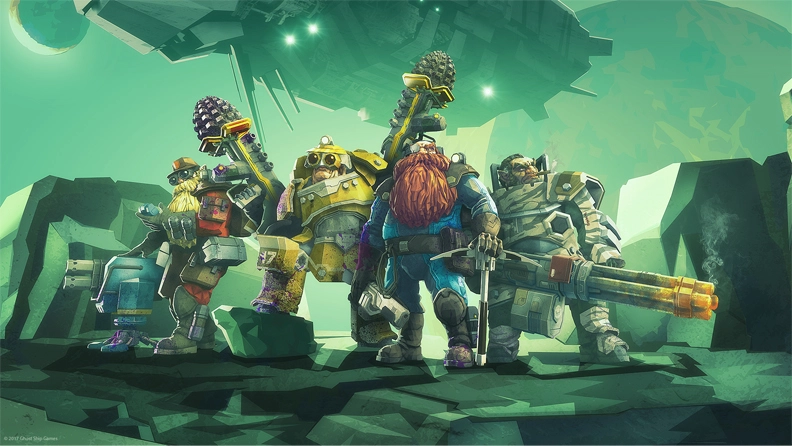
It’s understandable why a search query like “rogue core skills diablo 4” might arise, as both “Rogue Core” and “Diablo 4” are prominent titles in the gaming landscape, and the word “rogue” appears in both names. However, it’s crucial to clarify that Deep Rock Galactic: Rogue Core is an entirely separate game from Diablo 4, developed by different studios, belonging to different genres, and featuring distinct gameplay mechanics. As such, the concept of “skills” in Deep Rock Galactic: Rogue Core is fundamentally different from the intricate skill trees found in Diablo 4.
This article will explain what Deep Rock Galactic: Rogue Core is, how its progression and player power systems are expected to function as an FPS roguelite, and why comparing its “skills” to an action RPG like Diablo 4 isn’t accurate.
What is Deep Rock Galactic: Rogue Core?
Deep Rock Galactic: Rogue Core, developed by Ghost Ship Games and published by Ghost Ship Publishing and Coffee Stain Publishing, is a 1-4 player co-op FPS action roguelite. It was released on May 20, 2026, and is currently available in Early Access on Windows. This title builds upon the beloved universe of Deep Rock Galactic, bringing players a new, distinct experience.
The core premise involves players taking on the role of elite dwarven Reclaimers. Their mission is to fight through perilous mining facilities that have become infested with deadly Corespawn. The game emphasizes challenging, procedurally-generated caves, ensuring that each expedition offers a fresh and unpredictable experience. The genre classification of “FPS action roguelite” is key to understanding its approach to player power and progression.
”Skills” in an FPS Roguelite: Deep Rock Galactic: Rogue Core’s Approach
Unlike action RPGs such as Diablo 4, which feature persistent character classes with extensive, branching skill trees that players invest points into over many hours of gameplay, Deep Rock Galactic: Rogue Core, as an FPS roguelite, handles player progression and power-ups differently. In roguelite games, the focus is typically on temporary, run-specific enhancements and strategic choices made during each expedition, rather than permanent character builds that carry over indefinitely.
Here’s what players can generally expect from a roguelite FPS in terms of how their dwarven Reclaimer will gain power and adapt to challenges:
Temporary Upgrades and Boons
During each run through the procedurally-generated caves, Reclaimers will likely encounter various temporary upgrades, buffs, and boons. These could manifest as:
- Weapon Augmentations: Enhancements to your primary and secondary firearms, such as increased damage, faster fire rate, larger magazine capacity, or unique elemental effects. These modifications would typically only last for the duration of that specific run.
- Tool Enhancements: Upgrades for your utility tools, like improved traversal equipment, stronger grenades, or more efficient mining devices. These temporary boosts are crucial for navigating dangerous environments and overcoming obstacles.
- Character Buffs: Short-term improvements to your dwarf’s stats, such as increased health, faster movement speed, damage resistance, or special combat abilities that activate under certain conditions. These are picked up during a run and reset when the run ends.
- Synergistic Combinations: Roguelites often encourage players to discover powerful combinations of upgrades that work well together, allowing for unique and effective playstyles that are emergent during a run.
Strategic Loadout Choices
Before embarking on a mission, Reclaimers will likely have options to customize their initial loadout. This might include choosing specific weapons, gadgets, or even a particular dwarven class or archetype if the game features them. These choices represent a form of “skill” in the sense of tactical preparation and adapting your starting gear to the expected challenges, rather than assigning points to a traditional skill tree.
Meta-Progression (Unlocks, Not Direct Power)
While individual runs in a roguelite are largely self-contained, many modern roguelites incorporate a layer of meta-progression. This usually involves unlocking new weapons, tools, cosmetic items, or starting bonuses that become available for selection in subsequent runs, rather than directly boosting your character’s power permanently. For example, completing certain objectives might unlock a new weapon variant you can choose to start with, adding to the variety and strategic depth of future expeditions.
However, specific details on Deep Rock Galactic: Rogue Core’s meta-progression systems are not fully detailed in the official Steam information. Players interested in these specifics should consult the official Deep Rock Galactic: Rogue Core Steam store page or Ghost Ship Games’ official communication channels for the most up-to-date information as the Early Access period progresses.
Player Skill and Teamwork
In an FPS roguelite, the most significant “skill” often lies with the player themselves: their aiming proficiency, movement and positioning, tactical decision-making under pressure, and ability to effectively communicate and cooperate with their fellow dwarven Reclaimers in a co-op setting. The challenges presented by the Corespawn and the procedurally-generated environments will demand adaptability and solid FPS fundamentals.
Why the Confusion? Rogue vs. Rogue
The confusion likely stems from the term “rogue” appearing in both “Deep Rock Galactic: Rogue Core” and the “Rogue” class in Diablo 4. While the word “rogue” in “Rogue Core” refers to the “roguelite” genre, emphasizing its procedural generation, temporary power-ups, and run-based gameplay, the “Rogue” in Diablo 4 refers to a specific character class known for its agility, ranged combat, and traps. These are distinct uses of the term and represent fundamentally different gameplay philosophies.
What About Diablo 4?
Diablo 4 is an action RPG (ARPG) known for its dark fantasy setting, loot-driven progression, and character customization through extensive skill trees, paragon boards, and gear. Players choose a class (such as Barbarian, Sorcerer, Necromancer, Druid, or Rogue) and invest skill points into abilities, passive talents, and upgrades that permanently define their character’s combat style and effectiveness. This system allows for deep theorycrafting and long-term character building, which is a hallmark of the ARPG genre.
It’s important to reiterate that while both games offer exciting action experiences, their core mechanics for character progression and player power are built on entirely different foundations.
Deep Rock Galactic: Rogue Core’s Unique Identity
Deep Rock Galactic: Rogue Core is carving out its own identity within the Deep Rock Galactic universe, offering a fresh take on dwarven combat and exploration through the roguelite lens. Its focus on intense FPS action, co-op teamwork, and the thrill of adapting to ever-changing, procedurally-generated environments sets it apart. The game invites players to master its combat, learn to leverage temporary upgrades effectively, and coordinate with their team to overcome the relentless Corespawn.
As an Early Access title, Deep Rock Galactic: Rogue Core is expected to evolve and expand over time. Future updates may introduce new weapons, tools, enemy types, and potentially deeper systems for player progression or customization within its roguelite framework.
Staying Updated
For the most accurate and up-to-date information regarding Deep Rock Galactic: Rogue Core’s specific gameplay mechanics, progression systems, and any future features, players are strongly encouraged to consult the official Deep Rock Galactic: Rogue Core Steam store page. You can also follow Ghost Ship Games’ official social media channels and community forums for announcements and developer insights.
Continue Reading
Don't deploy without all the intel. Check out this related file:
Deep Rock Galactic: Rogue Core – Understanding the Gauntlet of Roguelite Progression →